
ACL Injury: Causes, Symptoms, and Treatment Options

About ACL injury
The anterior cruciate ligament (ACL) is a crucial component of knee stability, playing a key role in movement and weight-bearing activities. An ACL injury is one of the most common and serious knee injuries, often occurring due to sudden movements, high-impact sports, or accidents. This also occurs when this ligament is stretched, partially torn, or completely ruptured due to sudden stress or impact. It can lead to pain, swelling, instability, and restricted mobility, significantly affecting daily life and physical performance.
What causes ACL injury
Sudden stops or changes in direction while running will lead to ACL damage
Sports like football, basketball, and soccer players have a high risk of facing this trouble.
Landing improperly from a jump.
Direct injury or impact to the knee, which is common in accidents or sports.
Weak muscles or poor knee stability.
How it is diagnosed
Physical Tests
The Lachman Test and Pivot-Shift Test are two clinical assessments used to evaluate knee stability, particularly in cases of suspected anterior cruciate ligament (ACL) injuries. Both tests help healthcare professionals diagnose and assess the severity of knee instability or anterior cruciate tear
The Lachman Test involves gently lifting the tibia (shinbone) while stabilizing the femur (thigh bone), checking for excessive movement.
The Pivot-Shift Test assesses the knee's rotational stability by applying a gentle force to the tibia while flexing the knee.
MRI Scan
Provides a detailed view of the ACL damage and associated injuries.
X-ray
Rules out fractures that might have occurred alongside the injury.
Treating ACL injury
Can ACL Heal Without Surgery? Regenerative Medicine Solutions
Modern advancements in regenerative medicine offer non-surgical solutions for ACL repair without surgery, promoting natural healing and faster recovery.
- Regencare
Platelet-Rich Plasma (PRP) Therapy
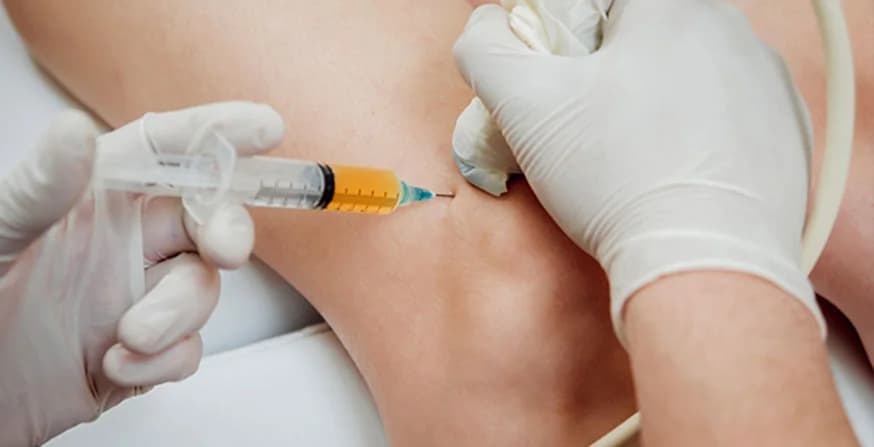
PRP therapy uses the patient’s own blood, processed to extract a high concentration of platelets rich in growth factors. These platelets are then injected into the injured ACL, stimulating tissue regeneration and reducing inflammation. Patients with partial ACL tears. Athletes looking for a non-surgical recovery option. Individuals seeking faster healing with minimal downtime.
- Regencare
Growth Factor Concentrate (GFC) for ACL Repair
GFC therapy is a step ahead of PRP, delivering highly purified growth factors directly to the injured ligament. This speeds up tissue healing, enhances collagen production, and improves ligament strength. Promotes faster ligament repair. Effective in reducing pain and swelling. Ideal for mild to moderate ACL injuries.
- Regencare
Stem Cell Therapy for ACL Repair
Stem cell therapy harnesses the body's natural healing ability by injecting mesenchymal stem cells (MSCs) into the damaged ACL. These cells help in tissue regeneration and strengthen the ligament over time. Regenerates damaged tissue instead of replacing it. Reduces pain and inflammation naturally. Suitable for patients looking for long-term solutions.
- Regencare
Bone Marrow Aspirate Concentrate (BMAC) for ACL Repair
BMAC therapy involves extracting bone marrow from the patient, which is rich in mesenchymal stem cells (MSCs) and growth factors. These components accelerate tissue repair, reduce inflammation, and promote ligament regeneration when injected into the damaged ACL. Provides a high concentration of stem cells for natural ligament repair. Aids in reducing pain and swelling associated with ACL injuries. Enhances healing in partial ACL tears and supports post-surgical recovery.
- Regencare
Stromal Vascular Fraction (SVF) for ACL strain treatment
SVF therapy is derived from the patient’s adipose (fat) tissue, which contains a rich source of regenerative cells, including stem cells, growth factors, and cytokines. When injected into an injured ACL, SVF promotes collagen synthesis, tissue remodeling, and faster healing.
Effectiveness of SVF for ACL Healing
Encourages natural ligament repair without surgery. Reduces inflammation and pain, improving mobility. Ideal for patients with chronic ACL injuries or degeneration.
What to expect
6-12 months
Gradual return to walking, exercises, and sports
More about ACL injury
In this section
- What is an ACL Injury?
- Importance of Early Diagnosis and Treatment
- Signs and Symptoms of an ACL Tear
- Common Symptoms of ACL Injury
- How to Differentiate Between a Sprain and a Full Rupture?
- Diagnosing an ACL Injury
- How is an ACL Injury Diagnosed?
- Autologous Conditioned Serum (ACS) for ACL muscle tear
- Why ACS is Beneficial for ACL Treatment
- Autologous Cultured Osteoblasts for ACL Repair
- Advantages of Autologous Cultured Osteoblast Therapy
- Non-Surgical Treatment Options
- Physical Therapy & Rehabilitation
- Bracing & Immobilization
- Lifestyle Modifications
- Surgical Treatment Options (Beyond Regenerative Medicine)
- ACL Reconstruction Surgery
- Minimally Invasive Surgical Techniques
- Post-Surgery Recovery & Rehabilitation
- Preventing ACL Injuries
- How to Reduce the Risk of ACL Tears
- Conclusion
- When Should You See a doctor?
- Why Choose Regencare?
What is an ACL Injury?

Importance of Early Diagnosis and Treatment
If you are feeling a sharp pain in the knee, don’t ignore it. Ignoring ACL damage can lead to long-term knee instability, making daily activities difficult and increasing the risk of arthritis. Seeking proper medical assistance can prevent complications in the future and speed up recovery.
Signs and Symptoms of an ACL Tear
Common Symptoms of ACL Injury
A torn cruciate ligament presents the following ACL signs and symptoms:
The above mentioned are the common symptoms of ruptured ACL.
How to Differentiate Between a Sprain and a Full Rupture?
- A sprain may cause mild pain in the joints but does not lead to complete instability, while a full rupture results in severe knee instability, often requiring medical intervention.
Diagnosing an ACL Injury
How is an ACL Injury Diagnosed?
Doctors use a combination of physical examination and imaging tests for an ACL injury diagnosis:
Autologous Conditioned Serum (ACS) for ACL muscle tear
ACS therapy is a specialized treatment that uses anti-inflammatory cytokines and growth factors derived from the patient’s own blood. This serum is injected into the injured ACL, helping to reduce pain, suppress inflammation, and enhance the healing response.
Why ACS is Beneficial for ACL Treatment:
- Effectively controls inflammation, preventing further ligament damage.
- Enhances tissue repair and supports long-term knee stability.
- Suitable for athletes and active individuals looking to recover without surgery.
Autologous Cultured Osteoblasts for ACL Repair
This advanced regenerative treatment involves harvesting osteoblast cells (bone-forming cells) from the patient, culturing them in a laboratory, and then reintroducing them into the ACL injury site. While primarily used for bone regeneration, these cells can strengthen ligament attachments and improve overall joint stability.
Advantages of Autologous Cultured Osteoblast Therapy:
- Supports ligament healing by reinforcing knee joint structures.
- Helps in cases where ligament damage affects surrounding bone tissue.
- Provides a biological alternative to surgical ligament reconstruction.
Non-Surgical Treatment Options
Physical Therapy & Rehabilitation
Physical therapy plays a vital role in ACL strain treatment, focusing on:
- Strengthening quadriceps (front of the thigh) and hamstrings (back of the thigh).
- Restoring knee mobility and flexibility.
- Preventing further injuries through targeted exercises.
Bracing & Immobilization
Using a knee brace helps stabilize the injured ACL, reducing stress on the ligament and supporting recovery.
Lifestyle Modifications
Managing an ACL tear without surgery involves:
- Avoiding high-impact activities like sports.
- Maintaining a healthy weight to reduce knee strain.
- Using proper footwear to support knee alignment.
Surgical Treatment Options (Beyond Regenerative Medicine)
When is Surgery Necessary for ACL Injury?
If a complete ACL rupture causes extreme knee instability, ACL knee surgery might be required.
ACL Reconstruction Surgery
- The torn ACL is replaced using a graft (from the patient’s hamstring, patellar tendon, or a donor). It is typically recommended for severe ACL injuries and athletes. But ACL knee surgery recovery time will be more than other treatments.
Minimally Invasive Surgical Techniques
- Arthroscopic ACL surgery uses small incisions for faster recovery. This reduces scarring and, ACL heal time compared to open surgery.
Post-Surgery Recovery & Rehabilitation
- Initial rest and immobilization for healing.
- Gradual return to walking, exercises, and sports over 6-12 months.
Preventing ACL Injuries
How to Reduce the Risk of ACL Tears
Preventive strategies can lower the chances of a cruciate ligament rupture:
- Strength training for leg muscles.
- Flexibility exercises to maintain knee mobility.
- Proper warm-up routines before workouts or sports.
- Wearing knee braces for extra protection.
These are the basic steps for ACL injury prevention
Conclusion
Regenerative medicine offers groundbreaking solutions for ACL injury treatment, providing non-surgical alternatives that harness the body's natural healing abilities. These innovative regenerative cell treatments are ideal for individuals seeking faster recovery, long-term relief, and improved knee function without the risks of surgery.
At Regencare, we specialize in personalized regenerative treatments, ensuring that every patient receives the most effective care tailored to their condition. If you're experiencing an ACL injury and want to explore advanced, non-surgical healing options, schedule a consultation with our experts today. Your journey to a stronger, healthier knee begins here.
When Should You See a doctor?
If you experience persistent pain, swelling, or instability after a knee injury, consult an orthopedic specialist at Regencare.
Why Choose Regencare?
At Regencare, we offer personalized treatment plans tailored to each patient's unique needs. We specialize in regenerative medicine, providing cutting-edge non-surgical therapies, including innovative treatments like PRP, GFC therapy, BMAC (Bone Marrow Aspirate Concentrate), SVF (Stromal Vascular Fraction), autologous conditioned serum, autologous cultured osteoblast and Stem cell therapy for long-term relief. Additionally, our rehabilitation support services include physical therapy and strengthening exercises to promote optimal recovery and wellness.
👉 Book a Consultation Today!
Schedule a consultation today to explore personalized, non-surgical treatments tailored to your needs.
Your specialist

Dr. Vineeth M B
MBBS, MS Ortho
Founder · Orthopaedics

Bringing healthcare facilities to the ones who need it the most
Get expert treatment in Orthopedics & Dermatology.
- Kochi
- Kozhikode
- +91 73065 67548